A damaged shop front can expose your business to theft, weather, injury risks, and costly disruption. Emergency boarding provides a secure temporary barrier while permanent glazing repairs are arranged. Acting quickly helps protect stock, staff, customers, and the premises, preventing an already difficult situation from becoming far more serious overnight.
A broken shop window or damaged glazed entrance can turn an ordinary working day into a serious security problem. The immediate concern is not only the broken glass but everything the opening leaves exposed. Stock, equipment, staff, customers, and the building itself may all face greater risk. Arranging emergency boarding up for businesses provides a temporary barrier while permanent glazing repairs are assessed and completed. Acting quickly can reduce disruption, discourage unauthorised entry, and protect the premises from weather. Knowing what to do after damage occurs helps business owners respond calmly and prevent a difficult incident from becoming more costly.
Why Immediate Action Matters
Damage to a shop front rarely remains a single, contained problem. Once glass is broken or a frame is left open, the premises may become vulnerable to trespass, theft, water damage, and accidental injury. Even a relatively small opening can attract unwanted attention, especially when the business is closed.
Quick action limits the period during which the property is exposed. Boarding up does not replace professional glazing repair, but it creates a secure temporary solution that gives the owner time to arrange the correct replacement without leaving the building unprotected.
Creating a Secure Temporary Barrier
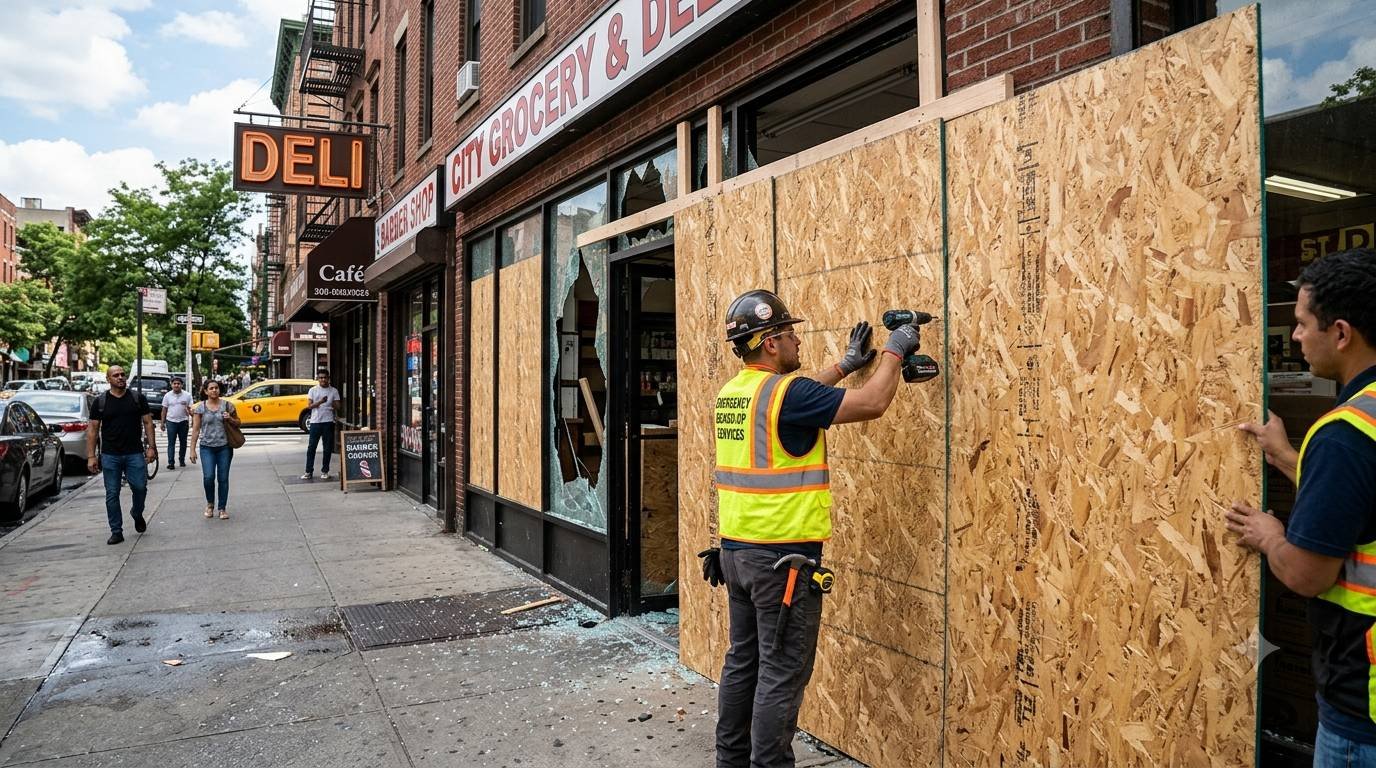
Emergency boarding is designed to cover broken windows, doors, or damaged glazed sections with strong, securely fixed panels. The aim is to close the opening as effectively as possible until permanent work can be completed. A properly fitted board should be stable, difficult to remove, and appropriate for the size and condition of the damaged area. It also helps separate customers and staff from sharp edges or unstable glass.
Professional installation matters because poorly attached materials may shift, leave gaps, or create additional hazards around the entrance. A secure barrier offers greater protection and creates a safer environment while further work is arranged.
Reducing the Risk of Further Theft
A visibly damaged business can appear easier to enter, particularly after trading hours. Broken glazing may reveal stock, tills, tools, computers, or other valuable equipment inside. Boarding up removes the obvious access point and makes opportunistic entry more difficult. It also reduces visibility into the premises, which can help prevent further unwanted attention. Although no temporary barrier can guarantee complete protection, securing the opening promptly is a practical step. It demonstrates that the property is being actively managed rather than left vulnerable after an incident.
Protecting the Interior from Bad Weather
An exposed shop front allows rain, wind, dust, and debris to enter the building. Water may damage flooring, displays, packaging, electrical equipment, and interior finishes. Strong winds can also loosen remaining fragments of glass or spread debris further inside. Temporary boarding helps shield the interior while replacement glass is measured, prepared, and installed. This protection is especially important when the damage occurs overnight, during poor weather, or before a permanent pane can be sourced. The faster the opening is covered, the lower the likelihood of avoidable secondary damage developing inside the premises.
Helping Keep Staff and Customers Safe
Broken commercial glazing presents an immediate safety concern. Loose shards may fall without warning, while small fragments can remain around entrances, pavements, and display areas. People may attempt to step around the damage without realising how unstable the remaining glass is. The affected area should therefore be kept clear until a qualified professional has assessed it. Temporary boarding creates a visible boundary and covers the opening, but the surrounding space should still be managed carefully. Clear internal instructions and restricted access can help protect staff, customers, delivery drivers, and passers-by.
Maintaining Business Continuity
A damaged frontage can interrupt trading even when the rest of the premises remains usable. Customers may assume the business is closed, while staff may feel unsafe working near an unsecured entrance. Arranging emergency boarding up for businesses can help stabilise the situation and support a controlled reopening where it is safe and practical to do so. The temporary barrier also gives the owner time to organise commercial window repair or replacement without making a rushed decision. Reducing downtime matters because every lost trading hour can affect revenue, customer confidence, staff schedules, and normal business operations. A fast response can make the recovery process more manageable.
Supporting Insurance and Repair Arrangements
After securing the property, business owners should document the damage before debris is removed, provided it is safe to do so. Clear photographs of the window, frame, surrounding area, and affected contents may support an insurance claim. Details such as the time the damage was discovered, its possible cause, police reference information, and emergency repair invoices should also be recorded. Boarding up helps prevent the condition of the premises from worsening while insurers, landlords, managing agents, or repair specialists are contacted. Keeping accurate records can make later discussions clearer and reduce delays during the claims or repair process.
Knowing What to Do Before Help Arrives
The safest response is to keep people away from the damaged area and avoid touching loose glass. Large fragments should not be removed from frames without professional equipment, as they may be heavier or less stable than they appear. Valuable stock near the opening should only be moved when the surrounding area is safe to enter. Doors leading to the affected section should remain closed where possible. The business owner should provide the glazing team with clear information about the size, location, access conditions, and nature of the damage. Accurate details can help professionals arrive with suitable tools and materials.
Why Professional Boarding Is Better Than a Quick Fix
It may be tempting to cover a broken window with cardboard, plastic sheeting, or loosely placed timber. These materials may offer limited protection from wind or visibility, but they rarely provide dependable security. Improvised coverings can detach, leave sharp glass exposed, or damage the surrounding frame. They may also create a poor impression and make the premises appear neglected. A professional glazier can assess whether unstable glass needs careful removal and determine how the opening should be boarded without making the permanent repair more difficult. Correct fitting also provides a cleaner, stronger, and more reassuring temporary solution.
Planning the Permanent Glazing Repair
Boarding up is an interim measure, so permanent repair should be arranged as soon as practical. The glazing specialist may need to inspect the frame, take accurate measurements, identify suitable glass, and assess whether surrounding components have also been damaged. In some cases, a repair can be completed quickly. In others, replacement glass or additional materials may need to be prepared before installation.
Business owners should ask what work is required, how the premises should be managed in the meantime, and whether any access restrictions are necessary until the new glazing is securely fitted.
Preventing Future Shop Front Damage
Not every incident can be prevented, but routine attention can reduce avoidable risks. Frames, locks, hinges, seals, and existing panes should be checked for signs of wear, looseness, or movement. Minor cracks or damaged fittings should not be ignored, as they may worsen under pressure or changing weather conditions. Keeping the shop front well lit may also discourage unwanted activity outside trading hours.
Businesses should avoid positioning valuable stock directly against exposed glazing overnight. A clear emergency contact procedure can also help staff respond quickly, particularly when damage occurs outside normal management hours.
In Summary
A damaged shop front can quickly create security, safety, and operational risks. Prompt boarding helps control these issues while glazing repairs are arranged. Key steps include keeping people away from broken glass, protecting the area, recording the damage, and contacting a commercial glazing professional. Temporary boarding should always be treated as a short-term solution. A fast, organised response helps prevent theft, damage, and disruption while ensuring safe and efficient permanent repairs.