A multi-sport program creates a constant trade-off. Field event gear must be available when athletics begins, yet storage, budgets and staff time are shared with many other activities. Planning works best when the school treats the equipment as an operational system rather than a collection of separate purchases.
Map training blocks, trials, carnivals and external competitions, then note where dates overlap with other sports. This shows when several groups may need the same measuring tools, markers or field space. It also identifies the weeks when inspections and setup must occur before staff become busy elsewhere.
Event coverage comes next. Schools should list the field events they actually deliver and the level at which students participate. A basic development program has different needs from a competition pathway. Buying advanced athletics equipment without trained supervision or suitable facilities can consume storage and funds without improving the program.
Shared items deserve special attention. Measuring tapes, cones, flags and field markers may move between athletics, cross-country and games lessons. A central booking method can prevent one department from taking the only complete set. Colour coding or numbered kits also makes returns easier to check.
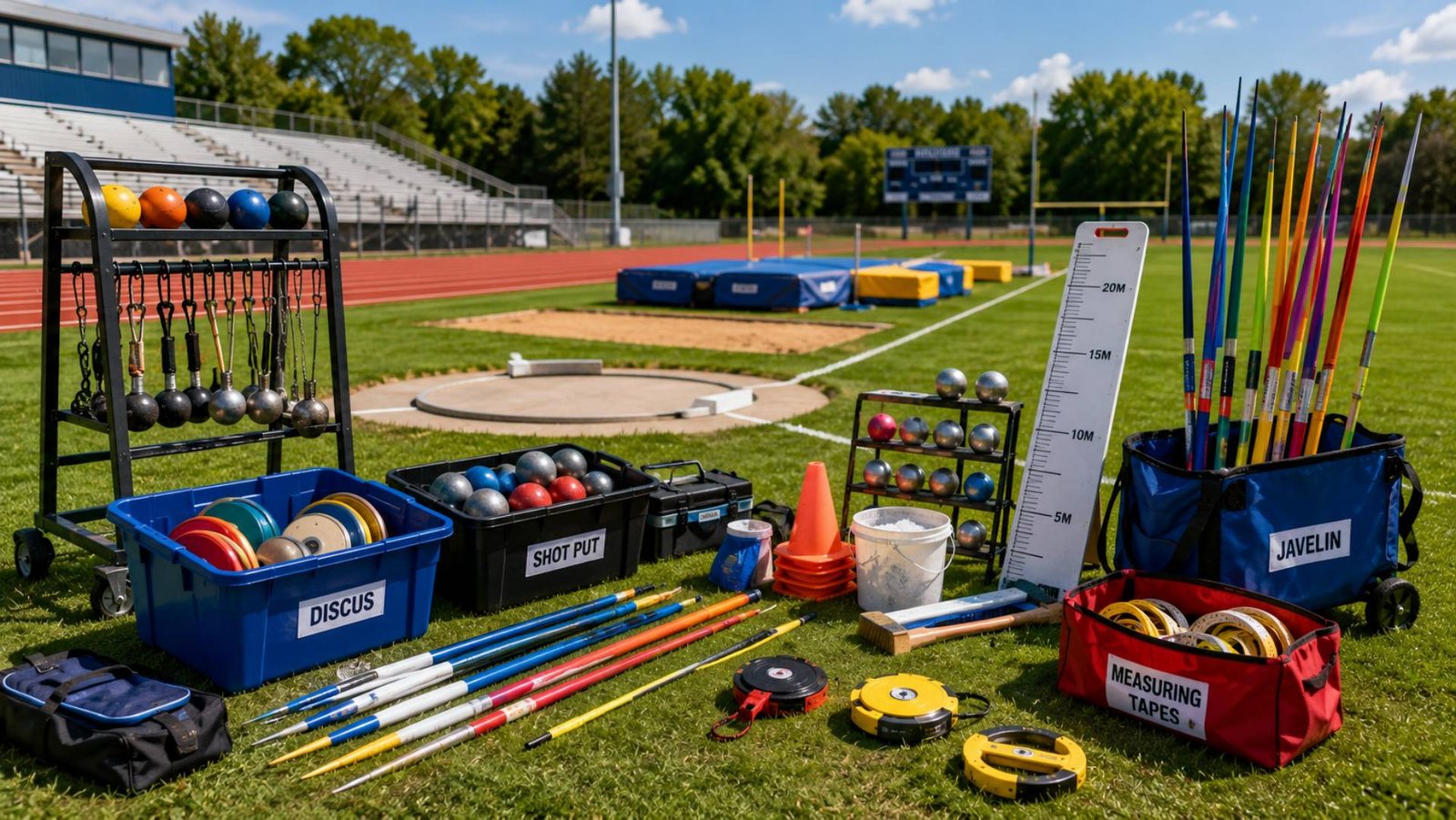
Event-specific gear should be stored together. Jumping items, throwing implements and sector markers are easier to manage when each group has a defined location. The storage plan should also separate equipment by size, weight or intended user where confusion could create risk. Labels must remain readable even during a rushed setup.
Inspection routines should match the item. Staff may need to look for deformation, cracks, sharp edges, loose parts, damaged handles or unreadable markings. Any concern should lead to removal from use until a competent person decides what happens next. A written record helps the program track recurring faults and replacement needs.
Transport is often overlooked. Gear may travel from a shed to a distant oval, then return in wet or dusty conditions. Trolleys, carry bags and tubs can reduce repeated lifting and protect smaller items. The route itself matters too, especially where staff cross steps, soft ground or public areas.
Procurement should consider compatibility. Replacement parts, storage racks and measuring systems are easier to manage when new purchases fit existing arrangements. However, consistency should not prevent improvement. If an older setup is difficult to use or no longer suits the program, a staged change may be more sensible than buying another matching item.
A reserve plan keeps sessions running. Spare pegs, clips and basic markers can solve small failures, while alternative drills can cover larger problems. Coaches should know what can be adapted and what requires cancellation. Safety-critical equipment should never be improvised simply to keep an event on schedule.
Responsibility needs names, not assumptions. One coordinator may oversee the register, while individual coaches check out and return each kit. Students can assist with counting and cleaning under supervision, but final inspection should remain with staff. Clear ownership prevents the familiar end-of-season question about who last saw an item.
At the end of each block, the school should review use rather than waiting for damage or loss. Which gear sat untouched? Which items created queues? Which kits took too long to assemble? These observations guide the next purchase cycle and expose where training, scheduling or storage is the real issue.
Budget planning should separate replacement, expansion and maintenance. Replacing a worn item protects the current program, while expansion adds capacity or a new event. Maintenance may involve cleaning materials, labels, storage fittings or professional checks. Keeping these categories visible helps decision-makers understand why a request for athletics equipment exists. It also reduces the chance that essential upkeep is delayed because all spending has been treated as optional new equipment.
Good planning allows athletics equipment to serve more students with less confusion. When the calendar, storage, transport and inspection routines work together, field events can fit a busy multi-sport program without relying on last-minute searches or unsuitable substitutions.