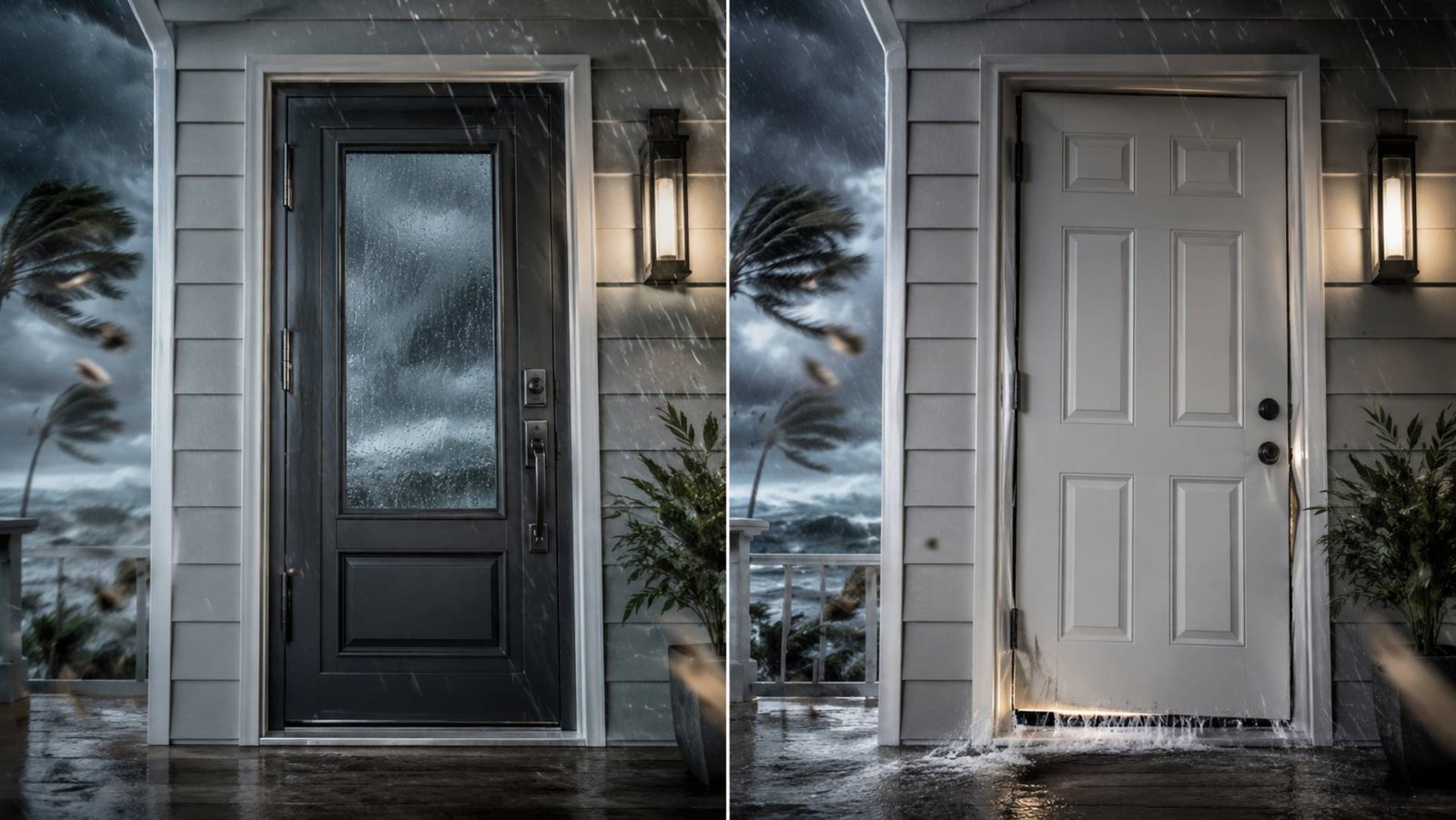
Florida’s hurricane season brings more than heavy rain and high winds. Flying debris, sudden pressure changes, and sustained gusts can turn ordinary entry doors into serious vulnerabilities. A standard door may look solid on a calm day, yet it can fail under the forces of a tropical storm, allowing water, wind, and debris inside. Hurricane-rated doors are built to different standards. They resist impact, maintain structural integrity, and help keep the home envelope sealed. Understanding these differences helps homeowners protect both their property and their families when severe weather arrives.
Homeowners seeking reliable protection often consult specialists who supply and install hurricane doors Clearwater FL that meet strict regional codes. These products go beyond everyday security to deliver certified performance against the specific threats Florida faces each year.
How Standard Doors Fall Short in Storm Conditions
Most residential doors are designed for daily use, privacy, and basic weather sealing. They handle normal wind and rain but are not engineered for the extreme loads of a hurricane. When wind speeds climb and debris becomes airborne, standard frames can flex, glass can shatter, and latches can fail. Once a door gives way, the sudden change in internal pressure can lift roofs or force other openings to fail as well.
Wind Pressure and Structural Weakness
Standard doors typically carry lower design pressure ratings. Under hurricane-force winds, the positive and negative pressures can push or pull the door out of its frame. Many lack reinforced cores, stronger hinges, or multi-point locking systems that keep the entire unit secure.
Impact Resistance Gaps
A common failure point is glass. Ordinary tempered or insulated glass breaks under the strike of a two-by-four or tree limb traveling at high speed. Once the glass is gone, the opening becomes an entry point for water and additional debris.
What Makes Hurricane Doors Different
Hurricane doors are tested and certified to withstand specific levels of wind pressure and large-missile impact. Products that meet Miami-Dade County or Florida Building Code protocols undergo rigorous laboratory testing that simulates real storm conditions. The result is a door system that stays intact and functional when standard doors would not.
Impact-Rated Construction
These doors feature laminated glass or polycarbonate layers that hold together even after impact. The glass may crack, but it does not allow large openings that invite further damage. Frames are often made from reinforced aluminum, steel, or heavy-gauge materials that resist distortion.
Higher Design Pressure Ratings
Certified hurricane doors carry documented design pressure values that match or exceed local wind-load requirements. Multi-point locks engage the frame at several locations rather than relying on a single latch. Continuous hinges or heavy-duty hardware distribute stress more evenly across the unit.
Many homeowners in coastal communities choose systems that also improve everyday performance. Better seals reduce air leakage, which can lower cooling costs during long Florida summers. Some models include insulated cores that add thermal efficiency without sacrificing storm protection.
Selecting the right product involves more than checking a label. Local climate, home elevation, and exposure to open water all influence the appropriate rating. Working with experienced installers who understand hurricane doors Clearwater FL ensures the chosen system matches both code requirements and the specific conditions of the property.
Practical Advantages Beyond Storm Season
Hurricane doors deliver benefits that extend past hurricane warnings. Stronger construction deters forced entry, giving homeowners added security year-round. Improved weather stripping and tighter seals help keep humidity and insects outside. In many cases, insurance carriers recognize certified impact products and may offer premium discounts once the upgrade is documented.
Installation and Code Compliance
Proper installation is essential. Even the strongest door can underperform if the frame is not anchored correctly to the structure. Florida codes require specific fastening methods and sometimes additional reinforcement around openings. Certified installers follow these details so the finished product performs as tested.
Maintenance and Longevity
Most hurricane-rated doors need only routine cleaning and occasional lubrication of hardware. The materials resist corrosion better than many standard options, especially in salt-air environments. Periodic checks of seals and locks keep the system ready for the next storm season.
Features Worth Comparing Side by Side
When evaluating options, focus on measurable differences rather than marketing claims:
- Certified large-missile impact resistance versus standard glass that shatters
- Documented design pressure ratings that meet or exceed local wind requirements
- Multi-point locking systems instead of single-point latches
- Reinforced frames and continuous hinges that resist flexing
- Laminated or multi-layer glazing that stays in place after impact
- Tighter perimeter seals that improve energy efficiency and water resistance
- Compatibility with existing openings or the need for frame modifications
These points make the performance gap clear. A standard door prioritizes cost and appearance for everyday use. A hurricane door prioritizes survival under extreme conditions while still offering attractive finishes and modern styles.
Matching Protection to Your Home
Not every opening requires the highest possible rating. Interior doors and sheltered locations may need less reinforcement than a front entry facing open water or a wide street. An assessment of exposure, home construction, and insurance requirements helps determine the right level of protection. Upgrading the most vulnerable doors first often delivers the greatest improvement in overall resilience.
Homeowners who replace outdated units frequently notice quieter interiors and more consistent temperatures. The tighter seals reduce drafts, and the stronger construction lessens the rattle that standard doors produce in high winds. These everyday improvements add comfort long after the storm season ends.
Stronger Entryways for Florida Living
Hurricane doors and standard doors serve different purposes. Standard doors meet daily needs but leave openings vulnerable when winds rise and debris flies. Hurricane-rated systems are tested against impact and extreme pressure, keeping the home envelope intact and reducing the risk of secondary damage. Better locks, reinforced frames, and laminated glass deliver protection that standard construction simply cannot match. Choosing certified products and professional installation turns a potential weak point into a reliable barrier. The upgrade brings peace of mind during storm season and improved performance every other day of the year.