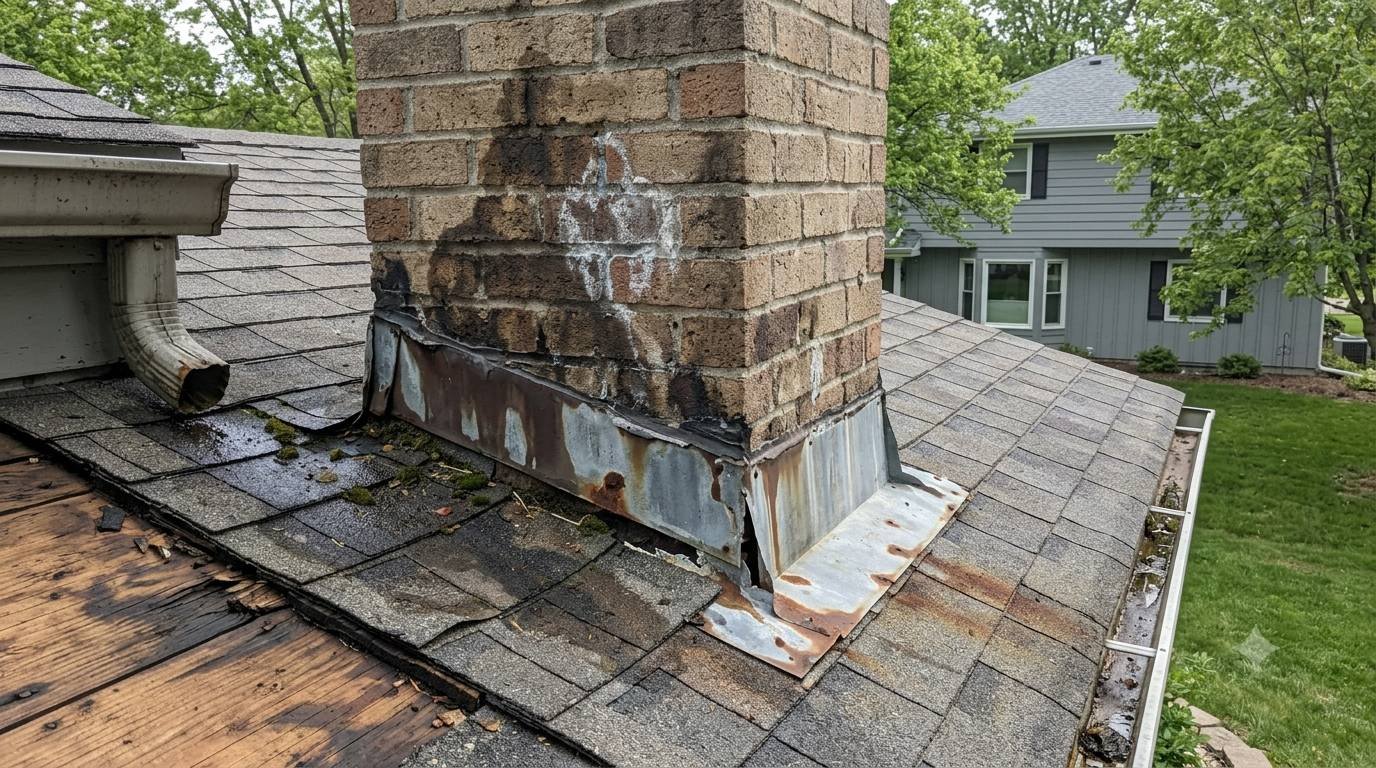
Chimney moisture problems can start in places that aren’t immediately obvious. Water may enter around damaged flashing, worn roofing materials, cracked masonry, or gaps where the chimney meets the roof. At first, the signs might seem minor, such as a damp patch, staining, or a musty smell. Over time, however, repeated moisture exposure can cause more serious deterioration.
Because the chimney and roof meet at a vulnerable part of the home, problems in one area can affect the other. Regular professional chimney inspections can help identify signs of water intrusion, damaged flashing, and masonry issues before they become more difficult and expensive to address. Understanding how these problems are connected can also help homeowners spot warning signs early.
Why Chimneys Are Vulnerable to Moisture
A chimney extends above the roofline, which means it is exposed to rain, snow, ice, and changing temperatures throughout the year. Masonry materials can absorb water, particularly when small cracks or damaged joints allow moisture to get deeper into the structure.
The area where the chimney meets the roof also needs careful protection. Flashing is designed to help prevent water from getting into the joint between the chimney and roofing materials. If that flashing becomes loose, corroded, bent, or damaged, water can find a path into the home.
Moisture doesn’t always cause an obvious leak straight away. It can move through small openings and remain hidden behind roofing materials, insulation, ceilings, or walls.
How Roof Damage Can Contribute to Chimney Moisture
Roofing materials around a chimney can deteriorate for several reasons. Age, severe weather, poor installation, and general wear can all create openings where water can enter.
When shingles or other roofing materials near the chimney are damaged, water may reach areas that were intended to remain dry. If the chimney flashing is also compromised, the risk of moisture intrusion increases.
Even a relatively small roofing problem can become more noticeable during heavy rainfall. Water may travel along roofing layers before appearing somewhere inside the home, making it difficult to identify the original source without a closer inspection.
Flashing Problems Are a Common Concern
Flashing forms a protective barrier around the base of the chimney. It needs to fit properly and remain securely connected to both the chimney and roof.
Common flashing concerns include:
- Loose sections: Flashing can separate from the roof or chimney over time.
- Corrosion: Metal flashing may deteriorate after years of exposure to moisture.
- Damaged seals: Old or cracked sealant can leave gaps around vulnerable joints.
- Improper installation: Poorly fitted flashing may allow water to enter even when the materials appear intact.
- Weather damage: Strong winds, ice, and heavy storms can move or damage flashing.
Because flashing is partly concealed by other roofing materials, some problems may not be visible from the ground.
Signs That Moisture May Be Getting Into the Chimney Area
Water intrusion can show up in several ways. Staining on ceilings or walls near the chimney is one possible warning sign, particularly after periods of heavy rain.
You may also notice peeling paint, damaged plaster, damp insulation, or a musty smell around the fireplace or chimney area. In some cases, the first visible sign is outside, such as deteriorating mortar joints, cracked masonry, or white staining on brick caused by moisture moving through the material.
Not every stain means the chimney is responsible, but repeated moisture in the same area deserves attention. Finding the source early can prevent the problem from spreading.
How Moisture Can Damage Chimney Masonry
Brick and mortar can handle normal outdoor exposure, but repeated water absorption can gradually weaken masonry. When water enters small cracks and temperatures fall below freezing, the moisture can expand and place pressure on the surrounding material.
Over time, this freeze-and-thaw cycle can contribute to cracking, loose mortar, and surface deterioration. Damaged masonry can then allow even more water to enter, creating a cycle that becomes harder to stop.
This is one reason chimney moisture shouldn’t be treated as only a cosmetic issue. The visible damage may be limited to a small section while moisture is affecting other parts of the chimney.
Roof and Chimney Problems Should Be Considered Together
It can be tempting to treat a roof leak and a chimney problem as two separate issues. In reality, the connection between the two areas can be significant.
If water is appearing near a chimney, checking only the chimney itself may not reveal the complete problem. The surrounding roofing materials, flashing, counterflashing, and nearby roof surfaces may also need to be examined.
Looking at the entire area can make it easier to determine where water is entering and how it is travelling. This is particularly useful when an interior leak appears some distance from the actual point of entry.
Why Regular Chimney Inspections Matter
Routine inspections give homeowners an opportunity to catch developing problems before moisture causes extensive damage. An inspection can help identify visible masonry deterioration, flashing concerns, signs of water entry, and other conditions that may need attention.
This doesn’t mean every chimney needs major repairs. Sometimes the issue may be relatively straightforward, such as deteriorated sealant or a small area of damaged flashing. Addressing these issues while they’re still limited can be much easier than waiting until water has affected roofing materials, walls, ceilings, or structural components.
Don’t Ignore Moisture After Heavy Weather
Severe weather can expose weaknesses that weren’t obvious before. Heavy rain, strong winds, snow, and freezing temperatures can all put additional stress on roofing and chimney components.
After significant weather, it’s worth paying attention to any new staining, dampness, unusual smells, or visible exterior damage. A change that appears suddenly after a storm may point to a problem that needs closer attention.
The sooner a potential source is identified, the better the chance of limiting further water damage.
Protecting the Area Around Your Chimney
Chimney moisture problems are often easier to manage when the roof and chimney are maintained together. Keeping roofing materials in good condition, watching for damaged flashing, and addressing masonry deterioration can reduce opportunities for water to enter.
Homeowners should also avoid assuming that a small leak will disappear on its own. Water can travel through hidden spaces, and repeated exposure can gradually make a minor problem much more serious.
Regular inspections provide a practical way to keep track of the chimney’s condition and identify areas that may need repair before they lead to wider moisture damage.
Final Thoughts
Chimney moisture and roof damage can be closely connected, particularly around flashing and the point where the chimney passes through the roof. Problems such as loose flashing, damaged shingles, cracked masonry, and worn seals can create pathways for water to enter the home.
Paying attention to early warning signs and arranging regular inspections can make it easier to catch these issues before they spread. A thorough look at both the chimney and surrounding roof area can also help reveal the real source of a leak. With consistent maintenance and timely repairs, homeowners can reduce the risk of ongoing moisture damage and keep this vulnerable part of the home in better condition.